
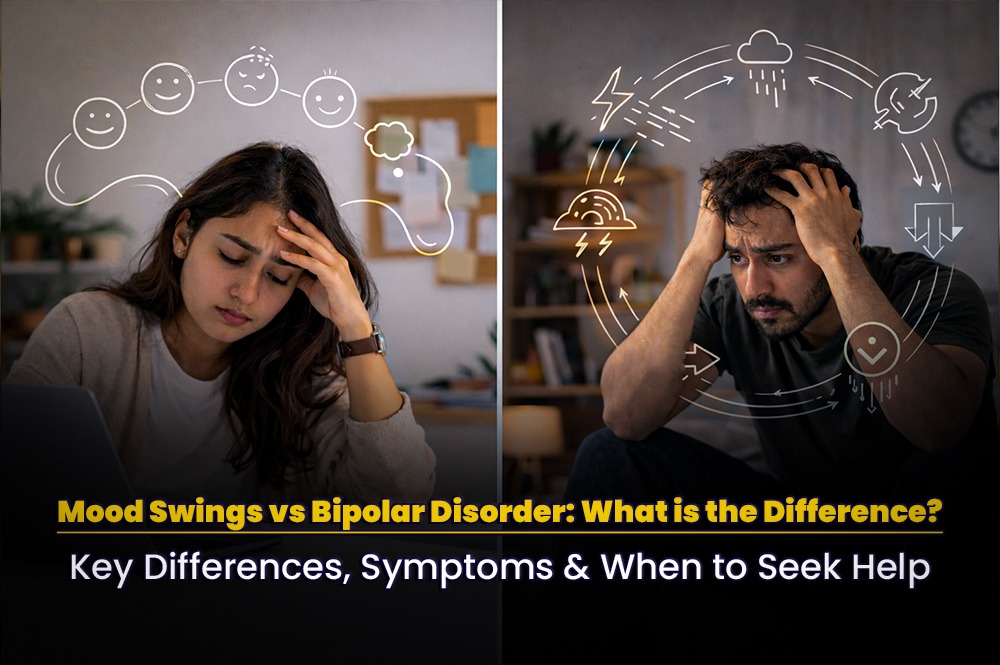
Our emotions. That is part of being human.
We have days when we feel full of energy and positive. Then we have days when we feel tired or irritated or low. We call these ups and downs mood swings. Sudden Mood Swings: Why Do They Happen?
Sometimes people start to think about something more serious.
They ask themselves: Are these mood changes or could it be bipolar disorder?
This kind of confusion happens a lot. Many people use the terms mood swings and bipolar disorder in the way even though they are very different things.
If we understand the difference we can tell when our mood changes are normal and when we should go see a doctor.
Let us try to understand this in terms.
What Are Mood Swings?
Mood swings are changes in our emotions that happen for a time. what causes mood swings
Most people experience mood swings.
One moment we feel happy. The next moment we feel irritated or stressed.
These changes usually happen because of things that happen in our life. Why Adult Mental Health Matters
For example:
- Stress at work
- Lack of sleep
- Hormonal changes
- Problems with the people we care about
- Feeling very tired
Imagine someone who had a stressful day at work.

They might feel angry in the evening.
But after they rest talk to their family or sleep well they feel better the next day.
That is a mood swing.
It does not last long and it does not make it hard for us to do our daily activities.
What Is Bipolar Disorder?
Bipolar disorder is a condition that affects our mental health.
It causes long-lasting changes in our mood.
These are not the normal ups and downs that we all experience.
People with bipolar disorder experience very strong emotions that we call mood episodes. symptoms of bipolar disorder
These episodes can last for days or weeks or even months.
Bipolar disorder is very different from the normal mood swings that we experience.
Bipolar disorder and mood swings are two different things and we should understand the difference between them.
1. Mania (High Mood Phase)
During this phase, a person may feel extremely energetic, excited, or overly confident.
Some common signs include:
- Talking very fast
- Sleeping very little but still feeling energetic
- Racing thoughts
- Impulsive decisions
- Risky behavior
At first it may look like the person is simply “very happy.”
But the behavior often becomes uncontrollable.
2. Depression (Low Mood Phase)
The opposite phase is deep depression.
During this period, a person may feel:
- Very sad
- Hopeless
- Extremely tired
- Disinterested in activities
I have a hard time concentrating.
Little things feel like a big deal.
These episodes are really tough way worse than feeling sad.
Mood Swings vs Bipolar Disorder: Key Differences
When you look at mood swings and bipolar disorder they might seem like the same thing.
They are actually very different when you think about how strong they are, how long they last and how they affect your life.
Here are the main differences.
Duration
Normal mood swings do not last long.
They might last a few hours or one day.
Bipolar disorder mood episodes can last for weeks or months.
Intensity
Mood swings are small changes in how you feel.
Bipolar disorder is when you have extreme emotions that affect what you think how you act and the choices you make.
Impact on Daily Life
Mood swings usually do not stop you from doing things normally.
Bipolar disorder can really affect your:
- Work
- Relationships
- Sleep
- Decision making
Pattern
Mood swings just happen sometimes depending on what is going on.
Bipolar disorder often goes in a cycle of feeling really high and then really low.
It is really important to recognize this pattern so you can get the right diagnosis.
Why Do Bipolar Symptoms Occur?
Most of the time mental health issues are not just because of one thing.
Bipolar disorder might be caused by several factors, such as:
- Neurotransmitter imbalance
- Stress and traumatic experiences
- Family history
- Brain functioning differences
A lot of the time how you feel is because of what is going on in your brain.

When the systems that control your mood get out of balance it becomes difficult to control emotions.
That is why people with bipolar disorder might feel really happy one moment and very sad another moment.
When Mood Swings Become a Warning Sign
Not every mood change means a disorder.
But certain signs suggest that the situation might be more serious.
You may need professional guidance if mood changes:
- Last for several weeks
- Affect sleep severely
- Cause impulsive or risky behavior
- Interfere with work or relationships
- Lead to extreme sadness or hopelessness
These signs could indicate a deeper mental health concern.
Early intervention can make a huge difference.
Understanding the Brain Behind Emotional Balance
Human emotions are closely connected with how the brain processes information.
Our behavior and emotional responses are influenced by certain cognitive functions such as:
- Attention
- Memory
- Emotional regulation
- Decision making
- Instant Memory vs Processing Memory
When the body’s systems get out of balance our behavior and mood can change too.
For example we might have trouble controlling our emotions.
That can lead to sudden anger or sadness.
So it is really important to strengthen these systems again for long-term mental health.
Our Approach to Mental and Neurological Healing
At Manovaidya we think that we should not just treat the symptoms of neurological problems.
Many mental health issues are connected to imbalances in the body.
We need to support the body’s system first so that the brain and nervous system can work better.
This is why we use Ayurvedic principles and modern understanding of neurological health together.
The Three-Phase Healing Approach
Our approach has three phases.
The goal is to bring balance to the body and brain slowly.
Phase 1: Gut Cleansing
Phase 1 is about cleaning the gut.
We do this by improving digestion and removing toxins from the body.
According to Ayurveda when toxins build up they can affect the brain and our emotions.
This phase includes:
- Dietary corrections
- Lifestyle adjustments
- Simple detox routines
When we strengthen our digestive fire our body can absorb nutrients better.
Phase 2: Brain Nourishment
This stage may include:
- Brain supportive herbs
- Medicated oils
- Nasya therapy
- Nervous system support
These methods help neurons and neurotransmitters so the brain can function better.
Phase 3: Cognitive Activation
Some methods we use include:
- Marma therapy
- Sensory activation practices
- Integration with therapies when needed
When we heal from the inside and train from the outside we can see long-lasting progress.
Why Internal Healing Matters
Many treatments only focus on external symptoms.
Real improvement often requires preparing the internal system too.
Therapies can help us learn behaviors and cognitive skills.
Internal healing helps the brain get ready to learn and process new information.
When we combine both approaches we can see progress faster and more stable.
Strengthening the Brain’s Core Functions
We also focus on strengthening three key cognitive principles described in Ayurveda: Ayurveda for Brain & Neuron Support in Kid
- Dhi – intelligence and learning ability
- Dhriti – control and judgment
- Smriti – memory and recall
These functions affect how we process information, control emotions and react to situations.
When these systems become stronger we can regulate emotions better.
Lifestyle Factors That Support Emotional Balance
Our habits can strongly affect how we feel. Best Teen Mental Health Treatment
Making changes to our lifestyle can help stabilize emotions.
Some helpful habits include:
- Keeping a regular sleep schedule
- Reducing excessive screen time
- Eating balanced food
- Practicing stress management
- Following a daily routine
Lifestyle consistency can support both physical and mental health.
When to Seek Help
Sometimes people ignore their mood symptoms for a long time.
Getting help early can prevent problems from getting worse.
You should think about seeking help if:
- Your mood changes feel uncontrollable
- Your emotional ups and downs are extreme
- Your sleep patterns become severely disturbed
- Your relationships or work start to suffer
A professional evaluation can help determine whether your symptoms are normal mood swings or a mental health condition.
Final Thoughts
Mood swings and bipolar disorder are not the thing.
Mood swings are when our feelings change a lot and this happens to everyone.
Bipolar disorder is a mental health problem that has really strong mood episodes that affect many parts of our life.
It is good to know the difference between mood swings and bipolar disorder so we can tell when we are just having a day and when we need some help.
If we are aware of what's going on and we get the right help and do things in a way that makes sense then we can start to feel better and have more balance, in our life and be happier.
Author Bio

Dr. Ankush Garg is an Ayurvedacharya and a Senior Ayurvedic Consultant at Manovaidya. He knows a lot about health care using Ayurveda. Dr. Ankush Garg also. Runs Shri Vrinda Ayurveda, LokAyu and Manovaidya Clinics. With training in Panchakarma from Dhanvantari Ayurveda Chikitsalaya, Dhule, Dr. Ankush Garg has substantial experience in managing stress, anxiety, depression, OCD, ADHD, Autism, and various neurological disorders.
With his expertise in Nadi Parikshan, Agni Karma, and classical Ayurvedic treatments, Dr. Ankush Garg focuses on root-cause healing with his personalized treatment plans. Dr. Ankush Garg also conducts wellness seminars and helps students improve their concentration, memory, and mental power.







.jpeg)