.jpeg)
Many parents today quietly carry the same thought:
“Why doesn’t my child understand me anymore?”
At the same time, many teenagers feel, “My parents don’t understand my life at all.”
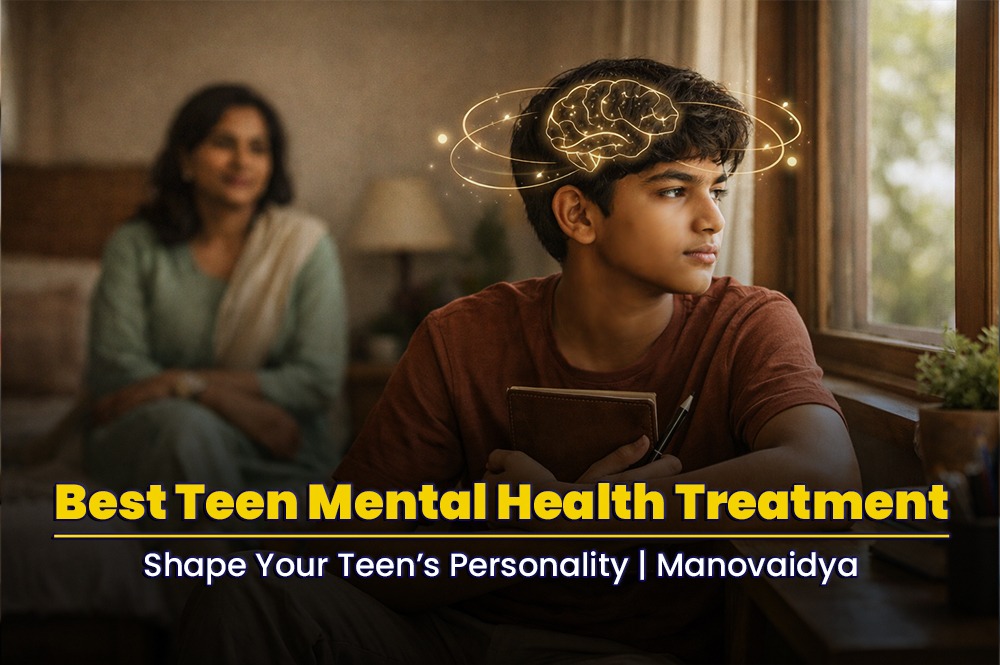
This tension is often labeled as the generation gap. But it is not just about age. It is about two completely different worlds colliding under the same roof.
When this confusion and emotional distance start affecting daily life, many families begin searching for the Best Doctor for Teenage Mental Health to understand what is really happening beneath the surface.
It’s Not Just an Age Gap — It’s a World Gap
Parents today grew up in a slower, simpler environment. Entertainment was limited. Friendships were mostly face-to-face. Stress usually meant exams or career choices. Validation came from family, teachers, and close circles.
Teenagers today live in a 24/7 digital world. They are constantly exposed to social media, online gaming, instant messaging, and global comparisons. Their stress is not limited to studies. It includes body image, social image, popularity, and the pressure to “fit in.”
One generation grew up with limited exposure. The other is growing up with unlimited exposure. That difference shapes personality, behaviour, and emotional responses.
When parents visit the Best Doctor for Teenage Mental Health, one of the first realizations is this: their child is not “difficult,” but overwhelmed.
Digital Overload and Emotional Changes
Earlier, boredom was common. And boredom was healthy. It built creativity, patience, and emotional strength.
Today, boredom rarely exists. The moment a teen feels uncomfortable, they scroll, stream, or play. Their brain stays stimulated almost all the time. Over time, this constant stimulation affects attention span, sleep quality, and mood stability.
Parents often complain about lack of focus or impatience. But in many cases, the root issue is overstimulation, not attitude.
The Best Doctor for Teenage Mental Health often explains that a developing brain reacts differently to constant digital input. Understanding this biological impact changes how parents respond.
The Pressure to Be Perfect
In the past, the pressure was simple: “You must become successful.”
Now the pressure is more complex: “You must become successful like someone”
Social media constantly shows edited versions of perfect bodies, perfect lifestyles, and perfect achievements. Even if it is unrealistic, the teenage brain absorbs it as reality. This creates confusion, comparison, and self-doubt.
At the No.1 Mental Health Clinic for Teenagers, many teens share the same hidden fear: “I am not enough.”
Parents may not always see this internal struggle. But a trained Best Doctor for Teenage Mental Health can identify these emotional patterns early and guide both the teen and the family.
The Communication Breakdown
Another major reason for the generation gap is communication style.
Parents usually speak from experience. Teens speak from emotion.
When parents say, “We know better,” teens may hear, “You don’t understand me.”
When parents say, “Keep your phone away,” teens may feel their entire social world is being dismissed.
This is not always disobedience. Often, it is a translation gap between logic and emotion.
The No.1 Mental Health Clinic for Teenagers focuses heavily on improving this communication bridge because connection reduces conflict.
Why Conversations Often Fail
There are common patterns seen in families:
- Parents move quickly into solution mode. Teens want to feel heard first.
- Conversations start at the wrong time, especially when emotions are already high.
- Tone becomes judgmental without parents realizing it.
- Teens fear that whatever they share may later be used against them.
When this continues, emotional distance slowly builds.
Seeking guidance from the Best Doctor for Teenage Mental Health helps families learn structured communication techniques that reduce defensiveness and rebuild trust.
Emotional and Biological Factors
Modern teenagers are facing high stress levels, irregular sleep, hormonal fluctuations, and dopamine overload from screens. These factors directly affect mood, anger, and motivation.
Parents often say, “We also had stress.” That is true. But the intensity and constant exposure today are very different.
The Best Doctor for Teenage Mental Health evaluates not just behaviour, but also sleep patterns, stress response, and lifestyle habits. This holistic view is why many families prefer the No.1 Mental Health Clinic for Teenagers for structured support.
From Control to Connection
One of the biggest mindset shifts parents can make is this:
Instead of thinking, “My child has changed,” try thinking, “My child is growing in a different environment.”
Control creates resistance.
Connection creates openness.
At the No.1 Mental Health Clinic for Teenagers, parents are guided to combine empathy with boundaries. Teens need limits, but they also need understanding. Too much control creates rebellion. Too much freedom without guidance creates confusion.
Balanced parenting is the key.
When the Gap Is Ignored
If the generation gap is not addressed consciously, it can lead to:
- Reduced communication
- Secretive behaviour
- Emotional shutdown
- Trust breakdown
This distance does not happen overnight. It builds slowly and silently.
Early support from the Best Doctor for Teenage Mental Health can prevent long-term emotional damage and strengthen the parent-child bond.
A New Way to Look at It – The Manovaidya Perspective
At Manovaidya, we often explain the generation gap with a simple example.
Parents grew up using keypad phones. Teenagers are growing up with smartphones. If you try to operate a smartphone with keypad logic, it will naturally feel confusing and frustrating.
But the phone is not wrong.
The system is simply different.
In the same way, your teenager is not “bad,” “lazy,” or “disrespectful” by default. They are growing up in a fast, highly stimulating, constantly connected world that did not exist a decade ago. Their brain is adapting to speed, comparison, and digital exposure that previous generations never experienced at this level.
At Manovaidya, the No.1 Mental Health Clinic for Teenagers, we believe the solution is not control. The solution is understanding, structure, and science-backed support.
When families consult the Best Doctor for Teenage Mental Health, they often realize that behaviour is only the surface. Beneath it lie emotional overload, stress chemistry, sleep imbalance, and identity pressure.
With the right awareness, guided communication, and structured therapeutic care, families can reduce misunderstandings and rebuild connection step by step.
The generation gap does not disappear when age reduces.
It disappears when awareness grows.