
 (1).png)
We often hear people say, “It’s just hormones.”
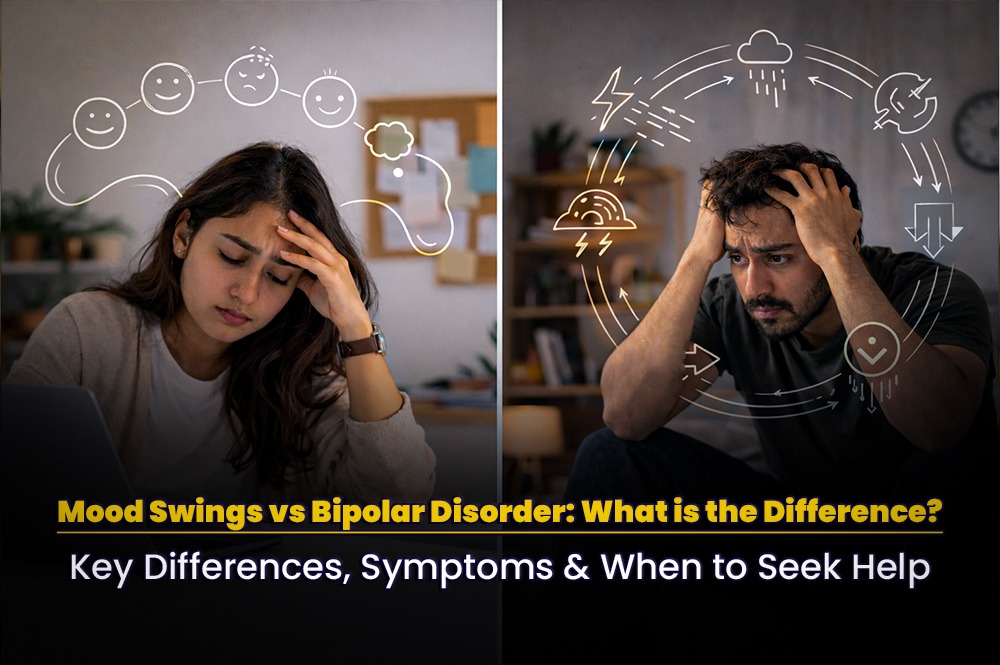
But for many women, mood swings are not “just” anything. They are overwhelming. Heavy. Real in a way that words sometimes can’t begin to describe. One moment everything seems normal. Manageable. Even peaceful. The next moment, irritation creeps in unnoticed.
A simple comment hurts more than it should. Tears well up for no apparent reason. Then, later on, there’s confusion. Why did I react like that?
If you see yourself in these descriptions, you’re not alone.
Mood swings in women are closely linked to hormonal shifts, yes. But that’s not the full picture. Sleep matters. Stress matters. Relationships matter.
The mental load of daily life matters too. It isn’t weakness. It’s biology meeting emotion.
In this blog, we’ll gently explore:
- Why hormonal mood swings happen
- What triggers sudden emotional changes
- Common symptoms
- Natural, practical solutions
- A small real-life story
What Are Mood Swings?
Mood swings are sudden changes in emotional state. Sometimes subtle. Sometimes intense.
You might move from:
- Happy to irritated
- Calm to anxious
- Motivated to drained
- Loving to distant
The shift can happen within minutes. Or slowly across a few days.

For an understanding you can read about Mood Swings.. Here we are focusing on women and their hormones.
The Hormone Connection
Women go through hormonal changes throughout their lives. These changes affect both their body and mind.
The main hormones involved are:
* Estrogen
* Progesterone
* Cortisol
* Thyroid hormones
These hormones are linked to serotonin and dopamine, which are chemicals in the brain that control mood.
Emotions usually follow the levels of hormones that go up or down.
Your body is simply shifting.
1. PMS (Premenstrual Syndrome)
A few days before the onset of the menstrual cycle, many women report:
- Irritability
- Depression
- Crying spells
- Anger for no apparent reason
- Feeling lethargic
This is because the levels of estrogen and progesterone hormones plunge abruptly before the onset of the menstrual cycle.
For some people it can be really overwhelming. Premenstrual Syndrome
In some cases it can cause a condition called Premenstrual Dysphoric Disorder or PMDD, for short.
2. During Periods
Some women feel relief once their period starts. Others feel:
- Fatigue
- Emotional sensitivity
- Low motivation
- Body discomfort affecting mood
Pain can make you feel emotionally weak. When your body is tired you get less patient. Pain makes your emotions go up and down. Your body being tired makes it hard to be patient.
3. Pregnancy
Pregnancy is beautiful, but hormonally intense.
Estrogen and progesterone levels rise rapidly. This can cause:
- Sudden crying
- Anxiety
- Mood instability
- Emotional dependency
One moment you feel deeply connected. The next, overwhelmed.
It’s normal. But support is important.
4. Postpartum Phase
After childbirth, hormone levels drop sharply.
This sudden change can lead to:
- Baby blues
- Irritability
- Crying without reason
- Feeling disconnected
- Postpartum depression (in some cases)
This phase needs understanding — not judgment.
5. Perimenopause & Menopause
As women approach their 40s or 50s, estrogen levels begin to decline.
Common emotional changes include:
- Mood swings
- Anxiety
- Irritability
- Sleep disturbances
- Feeling “not like yourself”
It can feel confusing because the emotional changes seem unexpected.
But again, it’s hormonal biology.
Why Do Sudden Mood Swings Happen?
Sometimes mood shifts feel extremely fast and intense.
You might wake up normal.
By afternoon, everything feels heavy.
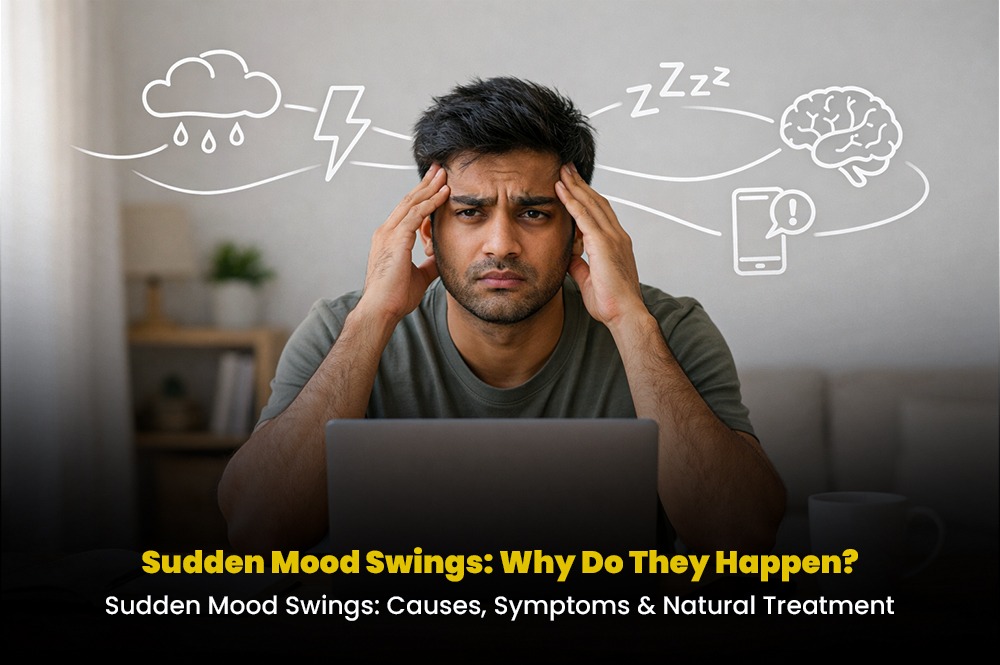
To understand these sudden changes better, you can read Sudden Mood Swings: Why Do They Happen?, which explains triggers beyond hormones.
But in women specifically, sudden mood swings can be triggered by:
- Hormonal fluctuations
- Lack of sleep
- Low blood sugar
- Stress overload
- Relationship tension
- Multitasking pressure
- Emotional suppression
Women often carry emotional labor silently. And when it builds up, it bursts — sometimes unexpectedly.
A Small Personal Story
Let me share something simple.
A woman once told me:
“Every month, 3–4 days before my period, I fight with my husband. Every time. And every month, I promise myself I won’t. But I still do.”
She wasn’t angry at him.
She was exhausted.
Mentally overloaded.
Hormones were low.
Sleep was disturbed.
But instead of saying, “I need help,” she reacted emotionally.
Later she would cry and feel guilty.
When she started tracking her cycle, she noticed a pattern. She began preparing herself during those days:
- She avoided serious discussions.
- She slept early.
- She asked for help.
- She reduced caffeine.
The fights reduced.
Not because she “controlled her anger.”
But because she understood her body.
Awareness changed everything.
Common Symptoms of Hormonal Mood Swings
Each woman will have her own experience, but some of the common symptoms of PMS include:
- Irritability
- Crying
- Feeling overwhelmed
- Being sensitive to criticism
- Feeling less confident
- Having outbursts of anger
- Feeling anxious
- Having little interest in activities you normally like
Sometimes, physical symptoms also appear, like:
- Bloating
- Breast tenderness
- Headaches
- Feeling tired
Natural Solutions for Hormonal Mood Swings
The good news?
There are practical and natural ways to reduce intensity.
Not eliminate completely — but manage better.
1. Track Your Cycle
Start simple.
Note:
- Period dates
- Mood changes
- Energy levels
- Sleep quality
Patterns bring clarity. Clarity reduces guilt.
2. Sleep Is Not Optional
Hormones regulate during sleep.
Lack of sleep increases cortisol (stress hormone), which worsens mood swings.
Aim for:
- 7–8 hours
- Same sleep time daily
- No heavy screen use before bed
Small habit. Big difference.
3. Balanced Nutrition
Blood sugar changes can really affect how you feel away.
Includes:
- Proteins in your meals
- Healthy fats
- Green vegetables
- Foods rich in iron
- Magnesium sources, like nuts and seeds
Try to cut down on:
- Much sugar
- Much caffeine
- Processed foods
When your blood sugar levels are stable your mood is more stable too!
4. Gentle Exercise
You don’t need intense gym sessions.
Even:
- 20-minute walk
- Yoga
- Stretching
- Light strength training
Exercise releases endorphins — natural mood stabilizers.
5. Sunlight & Vitamin D
Low Vitamin D is linked to mood instability.
Morning sunlight for 15–20 minutes helps naturally.
6. Emotional Expression
A lot of women keep their feelings to themselves.
Instead you can try things.
- Journal your feelings
- Talk to a trusted friend
- Practice deep breathing
- Seek therapy if you need it
Your feelings do not go away just because you do not talk about them.
Women's emotions do not disappear when women pretend they are not there.
7. Medical Check-Up
Sometimes mood swings are not just PMS.
They may be linked to:
- Thyroid imbalance
- PCOS
- Severe PMS (PMDD)
- Iron deficiency
- Chronic stress disorder
If mood swings are extreme, persistent, or affecting relationships, consult a doctor.
There is no shame in getting help.
When to Seek Professional Help
You should not ignore mood swings if:
- You feel hopeless regularly
- You have thoughts of self-harm
- You feel emotionally out of control
- Relationships are suffering severely
- Work performance is dropping drastically
Mental health is health.
Emotional Truth: It’s Not Weakness
Women are often told:
“You’re too emotional.”
But emotion is not weakness.
The problem is not feeling deeply.
The problem is not understanding the feeling.
When you understand hormones, cycles, stress triggers — you become empowered.
Not perfect.
But aware.
And awareness reduces self-blame.
Final Thoughts
Mood swings in women are a combination of:
- Hormones
- Stress
- Lifestyle
- Emotional load
They are not imaginary.
They are not drama.
They are not personality flaws.
They are signals.
Instead of fighting them, learn from them.
Start tracking.
Improve sleep.
Eat better.
Move gently.
Ask for support.
And most importantly — be kind to yourself.
Because sometimes, the woman who needs the most understanding…
is you.
Author Bio

Dr. Ankush Garg is an Ayurvedacharya and Senior Ayurvedic Consultant at Manovaidya, specializing in Ayurvedic mental health care. He is the Founder & Chief Consultant of Shri Vrinda Ayurveda, LokAyu, and Manovaidya Clinics. Trained in Panchakarma at Dhanvantari Ayurveda Chikitsalaya, Dhule, Dr. Garg has extensive experience in treating stress, anxiety, depression, OCD, ADHD, autism, and other neurological conditions. With expertise in Nadi Parikshan, Agni Karma, and classical Ayurvedic therapies, he focuses on root-cause healing through personalized treatment plans. He also conducts wellness seminars and supports students in improving focus, memory, and mental resilience.
Frequently Asked Questions
Sudden irritability
Crying easily
Anxiety
Feeling overwhelmed
Low energy
Anger without clear reason
Sensitivity to small issues
Some women also experience physical symptoms like bloating, headaches, or fatigue.
Sleeping for 7 to 8 hours
Eating regular meals with protein and healthy fats
Exercising regularly
Reducing caffeine and sugar
Practicing stress management techniques like meditation or journaling
Keeping track of your menstrual cycles
Mood swings are severe or extreme
You feel depressed most of the time
You have thoughts of self-harm
Your relationships or work life are suffering
Symptoms last longer than two weeks
Professional support can help identify conditions like PMDD, thyroid imbalance, or depression.

.jpg)
.jpg)
