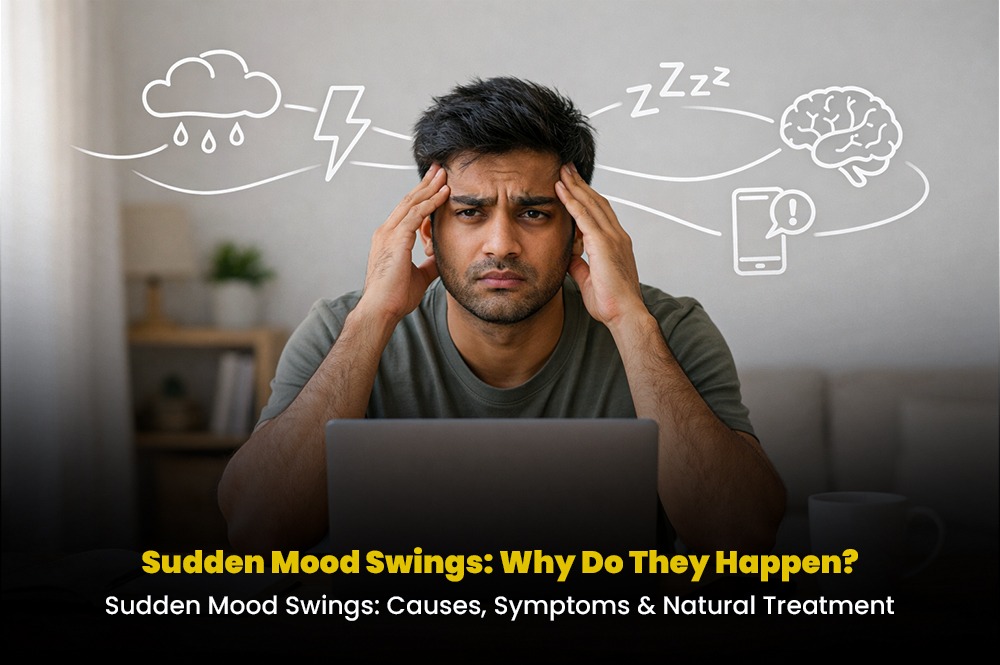
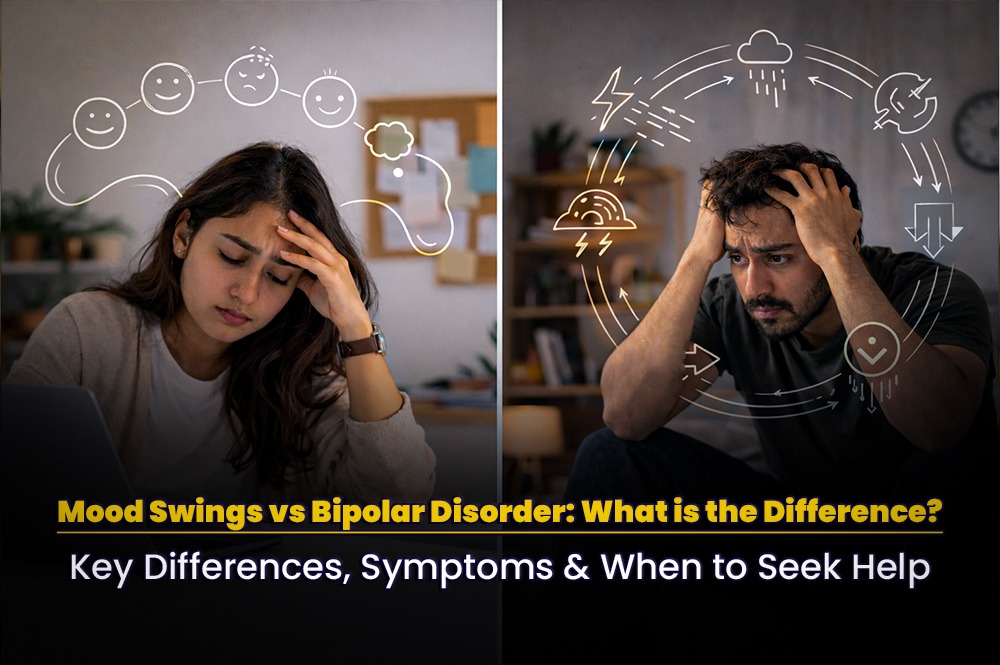
Sudden mood swings don’t just “happen randomly.”
Most of the time, your body is trying to tell you something.
Kabhi aap bilkul normal feel karte ho… aur next moment irritate, anxious ya emotionally drained. And the confusing part? There’s no clear reason.
But the truth is — there is always a reason. We just don’t notice it immediately.
Mood swings can be linked to hormonal shifts, stress overload, lack of sleep, poor nutrition, or even deeper mental health conditions like anxiety, depression, or bipolar disorder. If these changes are intense, frequent, or disturbing your daily life, it’s important not to ignore them.
Introduction: Why Does My Mood Change So Fast?
Let’s be honest.
Everyone has emotional ups and downs. That’s normal.
But when the shift feels sudden… extreme… and out of control — it can be scary.
You may ask yourself:
- “Why am I getting angry so quickly?”
- “Why do I feel empty for no reason?”
- “Why does my mood change in minutes?”
If this feels relatable, you’re not alone.
What Exactly Are Sudden Mood Swings?
Sudden mood swings are rapid emotional changes that feel unexpected or intense.
They may look like:
- Irritability without clear trigger
- Sudden sadness
- Emotional numbness
- Anxiety spikes
- Anger outbursts
- Short happiness followed by low mood
Kabhi kabhi yeh sirf temporary hota hai.
Lekin agar yeh pattern ban jaye — then it needs attention.
Your emotions are signals. Not weaknesses.
Read More : Instant Memory vs Processing Memory
Main Causes of Sudden Mood Swings
1. Stress & Emotional Overload
Stress is one of the biggest hidden triggers.
When you’re constantly thinking about work pressure, relationship issues, money tension, or family responsibilities — your body releases cortisol (stress hormone). Over time, this disrupts emotional balance.
And slowly… irritability becomes your default mood.
Many people don’t realize they’re stressed until their mood starts reacting.

2. Hormonal Changes (Especially in Women & Teens)
Hormones silently control emotional regulation.
Even small hormonal fluctuations can cause noticeable mood changes.
Common triggers include:
- PMS
- Pregnancy
- Menopause
- Puberty
A lot of women experience mood instability before periods and think, “What’s wrong with me?”
Often, it’s just hormones doing their job — but aggressively.
Read More: Generation Gap Between Women & Teens
3. Lack of Sleep
Sleep is emotional reset time.
If you’re sleeping 5–6 hours regularly, your brain doesn’t get enough time to regulate emotions. Research shows sleep deprivation increases irritability and emotional reactivity.
Simple question:
Are you truly resting… or just lying in bed scrolling?
4. Blood Sugar & Nutritional Deficiencies
Low Vitamin B12, Vitamin D, iron deficiency, dehydration, or unstable blood sugar can directly impact mood.
Have you noticed feeling angry when hungry?
That’s not personality. That’s biology.
Your brain needs proper fuel to stay stable.
5. Underlying Mental Health Conditions
Sometimes mood swings are more than temporary shifts.
If emotional highs and lows feel extreme, or sadness lasts for weeks, it may indicate:
- Anxiety disorders
- Depression
- Bipolar disorder
Important: Not every mood swing means mental illness.
But repeated intense patterns should not be ignored.
Psychological Triggers We Often Ignore
Sometimes the cause isn’t physical — it’s emotional.
Common hidden triggers:
- Unresolved trauma
- Relationship insecurity
- Fear of failure
- Overthinking
- Suppressed emotions
- Burnout
When emotions stay unexpressed for too long, they don’t disappear.
They explode.
Social Media & Digital Overload
Constant scrolling. Comparison. Notifications.
Digital overstimulation quietly affects dopamine balance in the brain.
This may cause:
- Increased anxiety
- Low self-esteem
- Emotional comparison
- Sleep disruption
Try reducing screen time for just 5 days — you may notice emotional clarity improving.
Gut Health & Mood Connection
Your gut is often called the “second brain.”
It produces serotonin — the chemical responsible for mood regulation.
Poor digestion, junk food, and unhealthy gut bacteria may cause:
- Brain fog
- Low mood
- Irritability
- Energy crashes
Improving gut health through fiber, probiotics, and hydration can stabilize emotions naturally.
Strange? Maybe.
But science supports it.
When Are Mood Swings a Warning Sign?
You should seek professional help if:
- Mood shifts last for weeks
- You feel hopeless or empty
- There are sudden aggressive outbursts
- You isolate yourself socially
- You have thoughts of self-harm
These are not “normal mood changes.”
They require support.
And asking for help is strength — not weakness.
Natural Ways to Control Sudden Mood Swings
Before medication, lifestyle correction often works wonders.
Simple but powerful steps:
✔ 30 minutes daily physical activity
✔ Balanced meals with protein & healthy fats
✔ Deep breathing & meditation
✔ Fixed sleep routine
✔ Reduce caffeine & sugar
✔ Journaling emotions
✔ Talking to someone you trust
Consistency matters more than perfection.
Therapy: A Powerful Tool
Therapy doesn’t mean something is “wrong” with you.
It means you want to understand yourself better.
Benefits include:
- Emotional awareness
- Better coping skills
- Reduced impulsive reactions
- Stronger mental resilience
Cognitive Behavioral Therapy (CBT) is especially effective in emotional regulation.
Emotional Self-Check (5-Minute Reset Practice)
Next time your mood suddenly shifts, try this:
- Pause. Take 5 deep breaths.
- Ask yourself: “What am I actually feeling?”
- Identify the trigger.
- Rate your emotion from 1 to 10.
- Choose one healthy action (walk, water, journaling).
It sounds simple.
But small habits create emotional control over time.
Final Insight
Mood swings are not your enemy.
They are messages.
Your body and mind communicate through emotions. Instead of suppressing them, try understanding them.
Kabhi kabhi problem mood nahi hota — problem hota hai ki hum sun nahi rahe.
The first step toward emotional stability is awareness.
And you’ve already taken it by reading this.
Author Bio

Dr. Ankush Garg
Dr. Ankush Garg is a doctor who knows a lot about Ayurveda. He is a Senior Ayurvedic Consultant at Manovaidya. Dr. Ankush Garg has learned how to take care of peoples health using Ayurveda.
Dr. Ankush Garg got trained in Panchakarma from Dhanvantari Ayurveda Chikitsalaya in Dhule. So Dr. Ankush Garg is very good at helping people who are stressed, anxious or depressed. Dr. Ankush Garg also helps people with OCD, ADHD, Autism and other problems related to the brain.
Dr. Ankush Garg is an expert in Nadi Parikshan Agni Karma and old style Ayurvedic treatments. Dr. Ankush Garg likes to find the reason for a persons problem and then treat it. He makes a plan, for each person.
Dr. Ankush Garg also teaches people about wellness. He helps students do better in school by improving their concentration, memory and mental power.
Frequently Asked Questions
The right doctor is the one who understands your child’s development deeply.
Who looks beyond symptoms.
And follows a clear, structured healing approach.
That’s what truly makes a difference.
Autism is not something that disappears overnight.
But yes… improvement is possible.
With the right approach, children can develop better communication, behavior, and learning abilities.
The focus should be progress, not just labels.
If you notice delays around 1.5 to 2 years, don’t wait.
Early action can make a big difference.
Those early years are very important for brain development.
Delaying can slow down progress.
But often, they are not enough on their own.
They train the child from outside.
But if the brain is not ready internally, results stay limited.
That’s why combining therapies with internal healing gives better outcomes.
Parents try speech therapy, OT… still progress feels slow.
The reason can be internal blockage.
Like poor gut health or weak brain nourishment.
If the base is not strong, progress becomes slow.
Is the doctor giving clarity… or just instructions?
Is there a proper roadmap… or random suggestions?
Are they focusing on root cause… or just symptoms?
Your clarity will tell you the answer.
First small changes appear.
Better sleep.
Less hyperactivity.
Improved eye contact.
Then slowly… speech and understanding improve.
Every small step is a sign you are moving in the right direction.


.jpg)
 (1).png)