.jpg)
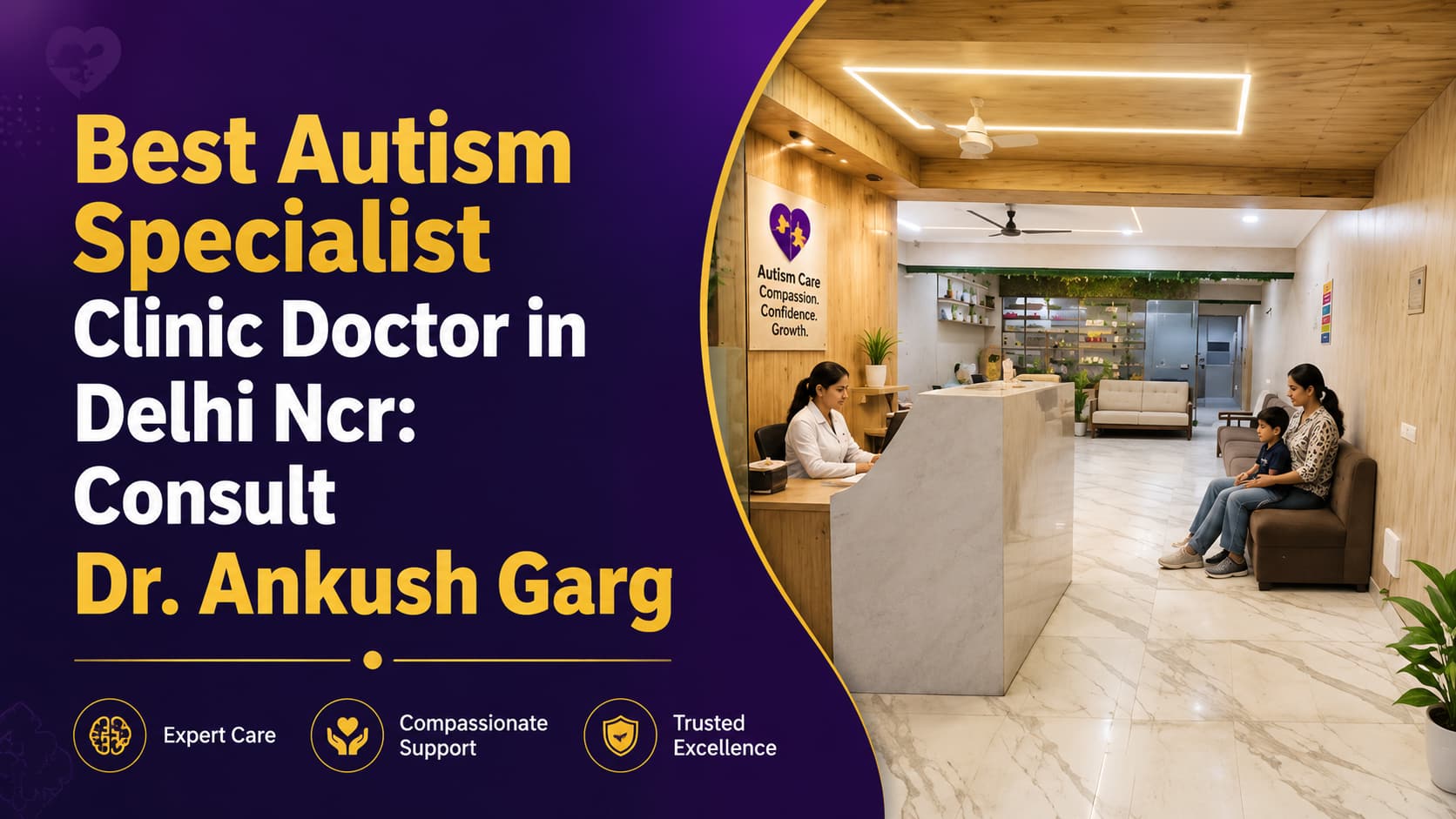
Autism diagnosis can leave parents confused, worried and unsure about the next step. Many families start thinking about speech delay, eye contact, behaviour, school, therapy and the child’s future. This is why structured Autism Care in Gurugram becomes important. At Manovaidya, Dr Ankush Garg focuses on brain development, gut health, sensory needs, behaviour guidance and step-by-step autism improvement through a Neuro-Ayurveda approach.
What Should Parents Do After an Autism Diagnosis in Gurugram?
After diagnosis, parents should start structured Autism Care in Gurugram that focuses on brain development, gut health, sensory needs, behaviour guidance, and daily progress tracking.
For parents looking for the best autism doctor in India, the right autism treatment India plan should not only manage symptoms. It should support real autism improvement through a brain development and gut–brain connection based Ayurveda autism treatment approach.
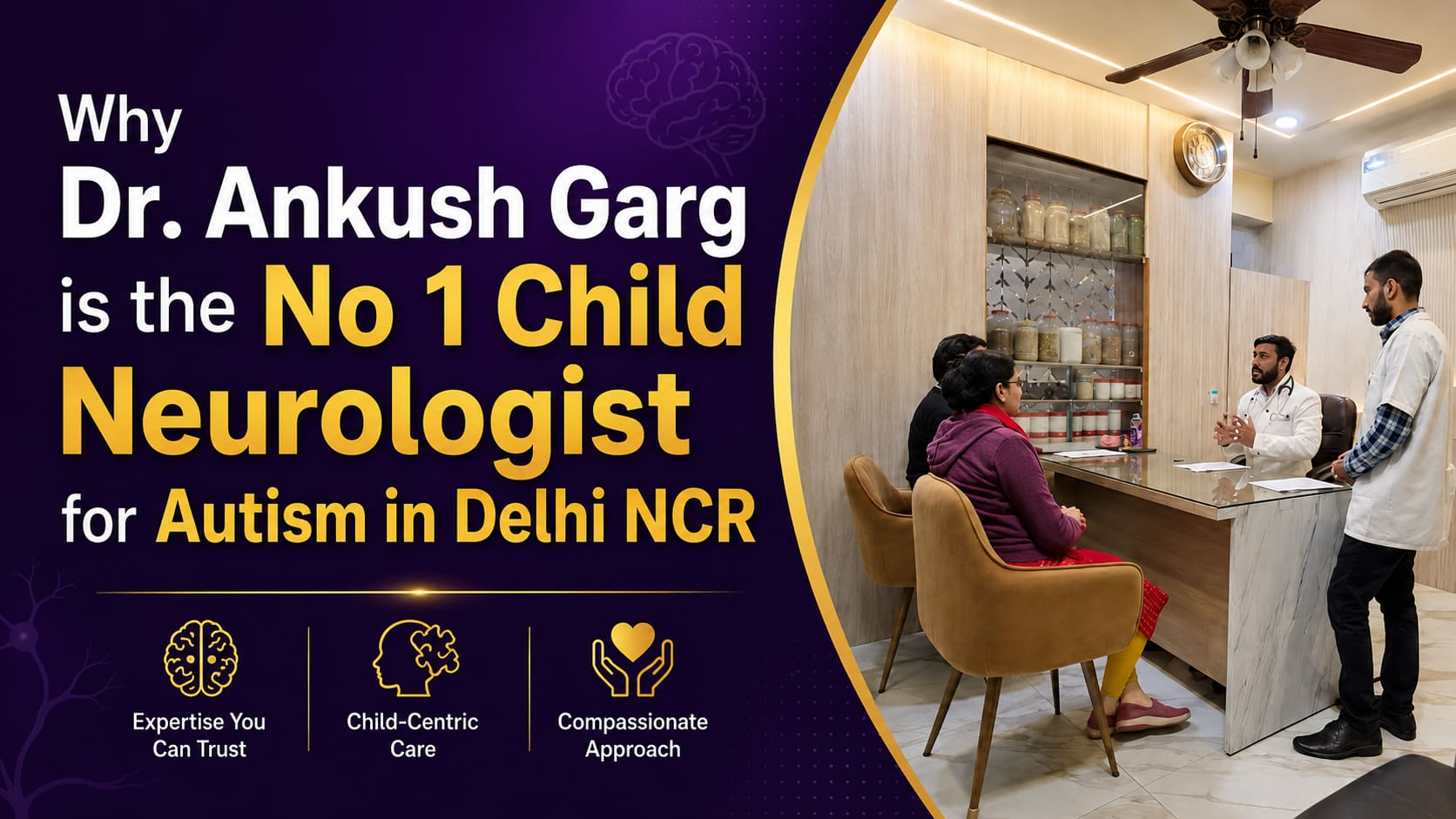
Dr Ankush Garg

Dr. Ankush Garg is an Autism, ADHD, Child Development & Mental Health Specialist in India, Founder of Manovaidya and Creator of the Neuro-Ayurveda Development System.
His work focuses on developmental, behavioural and mental wellness concerns through a structured Neuro-Ayurveda approach that emphasizes personalized guidance, family-centred support and long-term wellbeing.
A Clinical Observation From Dr Ankush Garg
Dr Ankush Garg often observes that many children with autism are not only struggling with speech or behaviour.
Many times, their internal system is disturbed too.
Sleep may be poor.
Digestion may be weak.
The child may be restless, irritated, sensitive to sound, or unable to sit for learning.
This is why only therapy may not show full results in some children.
At Manovaidya, Dr Ankush Garg looks at the child’s brain development, gut health, sensory response, behaviour pattern, and daily routine together.
Because autism improvement becomes easier to understand when we see the full child, not just one symptom.
Have you noticed that your child behaves worse when sleep or digestion is poor?
That small observation can tell a lot.
Understanding Progress in Autism
Progress in autism is rarely a straight line.
Some children show improvements in communication first.
Others progress more noticeably in attention, behaviour, sensory regulation or daily functioning.
Every child develops differently, which is why progress should be viewed individually rather than through fixed timelines or comparison with other children.
Meaningful progress is often built through small improvements that accumulate over time.
Progress Check Point
Parents should not only look for big changes.
In autism care, small changes are also important signs of progress.
You can track:
- Is the child sleeping better?
- Is digestion improving?
- Is irritability reducing?
- Is eye contact slightly better?
- Is the child responding to name more often?
- Is sitting tolerance improving?
- Are speech attempts increasing?
- Is the child calmer during routine changes?
- Is sensory reaction becoming less intense?
- Is behaviour easier to guide?
If these small signs are improving slowly, it means the child’s system may be responding.
Autism improvement usually happens step by step.
Not suddenly.
But when progress is tracked properly, parents feel more clear, more confident, and less lost.

Why Autism Care Feels Confusing for Many Families
Most parents do not sit quietly after diagnosis.
They try everything.
Speech therapy.
Occupational therapy.
Special education.
Home activities.
Diet changes.
School advice.
Online videos.
Still, many feel stuck.
Families visiting Manovaidya often say, “Doctor, we are doing therapies, but improvement is very slow.”
Have you felt this too?
The painful part is not effort. Parents are already trying hard.
The painful part is confusion.
They do not know whether the child needs more therapy, a different doctor, better diet, sensory support, or deeper medical care.
This is why Autism Care in Gurugram should be planned properly, not randomly.
Why Only Diagnosis Is Not Enough for Child Development
A diagnosis tells parents what the condition is.
But it does not always tell them what the child needs today.
One child may have speech delay.
Another may have poor eye contact.
Another may have severe sensory issues.
Another may have constipation, sleep disturbance, hyperactivity, anger, or poor sitting tolerance.
So, the treatment cannot be same for every child.
At Manovaidya, the focus is to understand the child beyond the label. The goal is to see brain, gut, behaviour, sensory response, sleep, food habits, and learning readiness together.
That is what makes Autism Care in Gurugram more complete.
Why Most Autism Treatments Do Not Bring Clear Results
Many autism plans focus only on external training.
Therapies are important.
But therapies work better when the child is internally ready.
If the child is not sleeping well, the brain is tired.
If digestion is weak, the body may stay uncomfortable.
If sensory overload is high, sitting and learning become difficult.
If the nervous system is restless, behaviour becomes harder to guide.
This is why therapies alone may give limited results.
The child may attend sessions, but still not respond well.
Parents may keep spending time and money, but remain unsure.
The Core Belief Behind Complete Autism Care
“Therapies alone lead to limited improvement in autism unless the internal brain and gut system are healed.”
"Many parents searching for the best autism doctor in India eventually reach Dr Ankush Garg after trying multiple therapies without clarity."
This belief is important because autism is not only a speech issue.
It is connected with brain development, gut–brain connection, sensory processing, attention, behaviour, emotions, and learning.
A better autism treatment India plan should look at the full child.
Not just one symptom.
What Does Complete Autism Care Really Mean?
Complete Autism Care in Gurugram means understanding why the child is struggling.
Why is speech delayed?
Why is eye contact poor?
Why does the child not respond to name?
Why does the child run, jump, cry, avoid food, or get angry?
Why does progress stop after some time?
Through Manovaidya, parents are guided to see these patterns carefully.
A child may not be ignoring you.
The child may not be able to process your voice properly.
A child may not be stubborn.
The child may be overwhelmed.
A child may not be “lazy.”
The brain may need nourishment and activation.
This is why autism treatment India should be emotional and scientific together.
How Autism Treatment India Supports Real Progress
A structured autism treatment India approach should work on both internal and external development.
Internal means gut, brain, sleep, nutrition, nervous system balance, sensory regulation, and energy.
External means therapy response, behaviour guidance, speech attempts, eye contact, sitting tolerance, learning, and parent training.
When both are supported, autism improvement becomes more practical.
Manovaidya follows a step-by-step system where parents are not left confused after consultation. They are guided on what to observe, what to improve, and how to track progress.
For parents who want to understand early guidance, you can read more about autism treatment here: Best autism doctor for early diagnosis.
Why Brain, Gut, Sensory and Behaviour Care Matter Together
The brain needs nourishment for attention, memory, speech, and learning.
The gut affects comfort, mood, sleep, and behaviour.
The sensory system affects how the child responds to sound, touch, light, food, movement, and crowds.
Behaviour guidance helps the child build daily routine and emotional control.
If one area is ignored, progress may remain incomplete.
For example, if gut discomfort continues, the child may stay irritable.
If sensory overload continues, the child may not sit.
If sleep is poor, learning becomes slow.
That is why Autism Care in Gurugram should never be only one-dimensional.
Neuro-Ayurveda Autism Development System
At Manovaidya, Dr Ankush Garg follows:
Neuro-Ayurveda Autism Development System
This system includes these exact pillars:
✔ Brain nourishment
✔ Gut repair
✔ Neural network activation
✔ Sensory integration
✔ Behaviour guidance
These pillars are designed to support autism improvement from inside and outside.
Brain nourishment helps learning readiness.
Gut repair supports internal comfort.
Neural network activation supports response and communication.
Sensory integration supports regulation.
Behaviour guidance supports daily life.
This is also why many parents looking for a Neuro-Ayurveda Specialist want an approach that understands development deeply.
How the Step-by-Step Treatment Flow Works
1. Gut Detoxification
Gut detoxification is often the first step.
Many children with autism have constipation, bloating, poor appetite, food sensitivity, or irregular digestion.
When the gut is disturbed, the child may become more restless, irritated, or uncomfortable.
Gut support prepares the body for better autism improvement.
2. Brain Nourishment
Brain nourishment supports attention, learning, speech readiness, memory, and emotional regulation.
In Ayurveda autism treatment, the aim is not only to reduce symptoms.
The aim is to make the child more ready to learn and connect.
3. Neural Activation
Neural activation means supporting weak developmental pathways.
When neural connections become more active, parents may notice better name response, more attention, better eye contact, and more speech attempts.
This is where Autism Care in Gurugram becomes more meaningful.
4. Attention and Behaviour Improvement
When gut, brain, and sensory systems start improving, behaviour becomes easier to guide.
The child may sit better.
Listen better.
Sleep better.
Try more.
Respond more.
Small changes matter because they show direction.
For parents comparing options, this guide on Best autism treatment doctor in Delhi NCR can help them understand what structured care should include.
A Real-Style Example Parents Can Relate To
“Many parents have reported improvement in eye contact, speech attempts, and behaviour within months…”
One child came with poor eye contact, delayed speech, constipation, anger, and very poor sitting tolerance.
Therapies were already going on.
But the child was not responding properly.
After starting a gut–brain focused plan, sleep improved first.
Then digestion became better.
Slowly, irritability reduced.
The child started sitting for longer.
Eye contact improved.
Then small speech attempts began.
This is how autism improvement often begins.
Not suddenly.
But clearly.
Common Mistakes Parents Should Avoid After Diagnosis
Parents make mistakes because they are worried, not careless.
Common mistakes include:
- Starting therapies without full evaluation
- Ignoring gut health and sleep
- Changing treatment too quickly
- Comparing the child with others
- Depending only on speech therapy
- Ignoring sensory issues
- Using random supplements
- Not tracking small progress
- Thinking improvement should happen overnight
- Waiting too long after early signs
If you are searching for an Autism doctor for child care, choose guidance that looks at the full developmental picture.
Is Your Child’s Autism Care Complete?
Use this simple self-check:
- Is gut treatment happening?
- Is brain nourishment given?
- Is behaviour guided?
- Is progress tracked?
If your answer is “No” to more than two questions, your child’s care plan may be incomplete.
Proper Autism Care in Gurugram should help parents understand what is missing and what should be added.
What Role Do Parents Play in Daily Autism Improvement?
Parents play a very big role.
A doctor can guide.
Therapists can train.
But daily routine happens at home.
Keep the routine calm.
Track sleep.
Observe food reactions.
Reduce screen overload.
Use simple instructions.
Give time to respond.
Do not force eye contact.
Celebrate small progress.
Families visiting Manovaidya are often guided to observe daily changes because autism improvement becomes easier to understand when parents track small signs.
When Should Parents Consult an Autism Specialist in Gurugram?
Parents should not wait if the child has:
Delayed speech.
Poor eye contact.
No name response.
Repeated spinning or jumping.
Sound sensitivity.
Poor sitting tolerance.
Frequent anger.
Food texture issues.
Sleep problems.
Constipation.
No interest in other children.
Regression in speech or behaviour.
Early guidance can reduce confusion.
The right Autism Care in Gurugram can help parents move from fear to action.
A Gentle Roadmap for Parents Moving Forward
Many parents feel guilty after diagnosis.
They think, “Did we miss something?”
Please do not blame yourself.
What matters now is the next step.
Autism improvement is possible when the child gets structured care, consistent support, and the right autism treatment India approach.
Ayurveda autism treatment can support brain development and gut–brain connection when it is planned carefully.
The same Neuro-Ayurveda principles used for developmental concerns are also applied at Manovaidya in areas such as ADHD, behavioural concerns, teen mental health, adult mental health, women’s emotional wellbeing and senior mental health support.
Contact us for more Details
"Many parents searching for the best autism doctor in India eventually reach Dr Ankush Garg after trying multiple therapies without clarity."
If you are searching for the best autism doctor in India and feel confused after trying multiple therapies, this is the right time to take a structured approach. You can book a consultation with Dr Ankush Garg at Manovaidya and understand your child's condition in depth.
The goal is not to change who the child is.
The goal is to help the child develop skills and improve their independence and reach their potential over time.
Call: +91-7823838638
Email: manovaidya2@gmail.com
Frequently Asked Questions
Progress can be seen in talking making eye contact paying attention being ready to learn, behaving, processing sensations and doing things.
Every child is unique.
Progress depends on the childs profile, age, strengths, support system and how consistent the help is.
The goal is not to change who the child is.
The goal is to help the child develop skills and improve their independence and reach their potential over time.
Many children show progress when they get the right support at the right time.
Improvement can be seen in speech, eye contact, sitting tolerance, attention, learning readiness, social response, sensory balance and daily behaviour.
But every child improves at their own pace.
Some children improve faster.
Some need more time and repeated support.
The goal is not overnight change.
The goal is steady development, better skills and more independence over time.
The first step is to understand the child’s complete profile.
Speech, behaviour, eye contact, attention, sensory issues, sleep, digestion, learning ability and emotional response should be observed properly.
After that, a structured plan should be made.
This may include therapy, parent guidance, routine correction, diet support, sensory support and regular progress tracking.
A roadmap helps parents know what to do first.
It also helps the child move step by step towards better communication, learning and daily life skills.
Many children with autism may also have digestion issues, constipation, food sensitivity, bloating or irregular appetite.
When the gut is disturbed, the child may feel more irritated, restless or uncomfortable.
This can affect sleep, behaviour, attention and learning readiness.
That is why gut health should not be ignored.
Supporting digestion, food habits and routine can help the child feel more settled.
When the body feels better, the brain also gets better support for learning and development.
Every child is different.
Some parents may notice small changes in a few weeks.
For many children, visible improvement may take a few months of consistent support.
Progress can come slowly in speech, eye contact, sitting, response, sensory control, behaviour and understanding.
The most important thing is consistency.
A proper plan, regular follow-up, parent involvement and patience can make a big difference.
Autism improvement is a journey.
Small progress also matters.
.jpg)
.jpg)
.jpg)
.jpg)